I've been working on something a little different: DM32EMU, an open-source emulator for the Baofeng DM-32UV.
The goal is to create a software environment where we can run and debug actual DM-32 firmware without needing a physical radio connected to the computer.
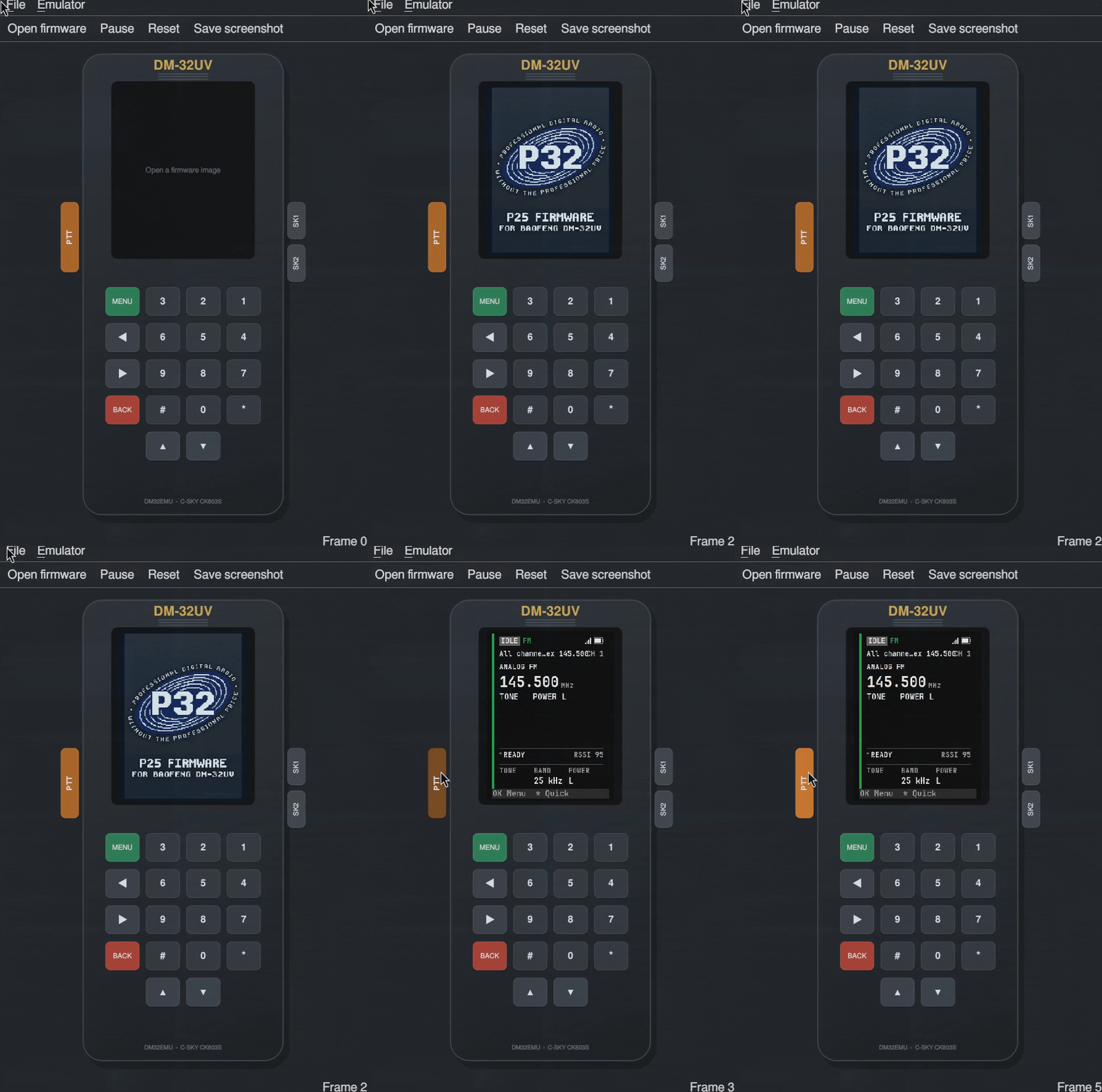
What makes this project particularly interesting is how it came together.
I used AI as a development partner throughout the process, working through the radio's hardware architecture, processor behavior, memory map, peripherals, and firmware execution. Rather than building a fake radio interface, the project takes the open-source firmware developed for the DM-32 and actually executes it inside an emulated hardware environment.
DM32EMU is written in C++ and models the radio's C-SKY CK803S processor, memory, interrupts, timers, GPIO, keypad, UART, SPI flash, and LCD controller.
It can currently boot and run firmware from several open-source projects:
P32
RadioFoundry
DM32Mayhem
The emulator can reach the firmware's boot screen and menus, process button presses, render the radio's 240×320 LCD, and expose debugging information.
There is also a Qt6 graphical interface with a virtual radio display and clickable keypad, alongside command-line tools for scripted input, instruction tracing, breakpoints, memory inspection, and screenshots.
This is still a work in progress. RF/modem operation, audio processing, and several hardware peripherals aren't emulated yet. The intention isn't to replace testing on a real radio, but to give firmware developers another tool to understand, experiment with, and develop for the platform.
One of the things I find most exciting about this project is what AI-assisted development makes possible. By combining open-source firmware, hardware research, and AI-assisted implementation, I've been able to build a working emulator for a radio platform that would otherwise require a substantial amount of specialized development work.
And this is just the beginning.